
For years, getting fit was often associated with running, cycling, long sessions on the treadmill and trying to burn as many calories as possible.
But things are changing.
More people are discovering strength training, and it isn’t just bodybuilders and powerlifters lifting weights anymore. From people in their 20s to those in their 40s, 50s and beyond, strength training is becoming an increasingly important part of staying fit, healthy and active.
And there are some very good reasons why.
Strength Training Isn’t Just About Building Muscle
When people hear “strength training”, they often picture someone lifting enormous weights in a gym.
In reality, strength training simply means asking your muscles to work against resistance.
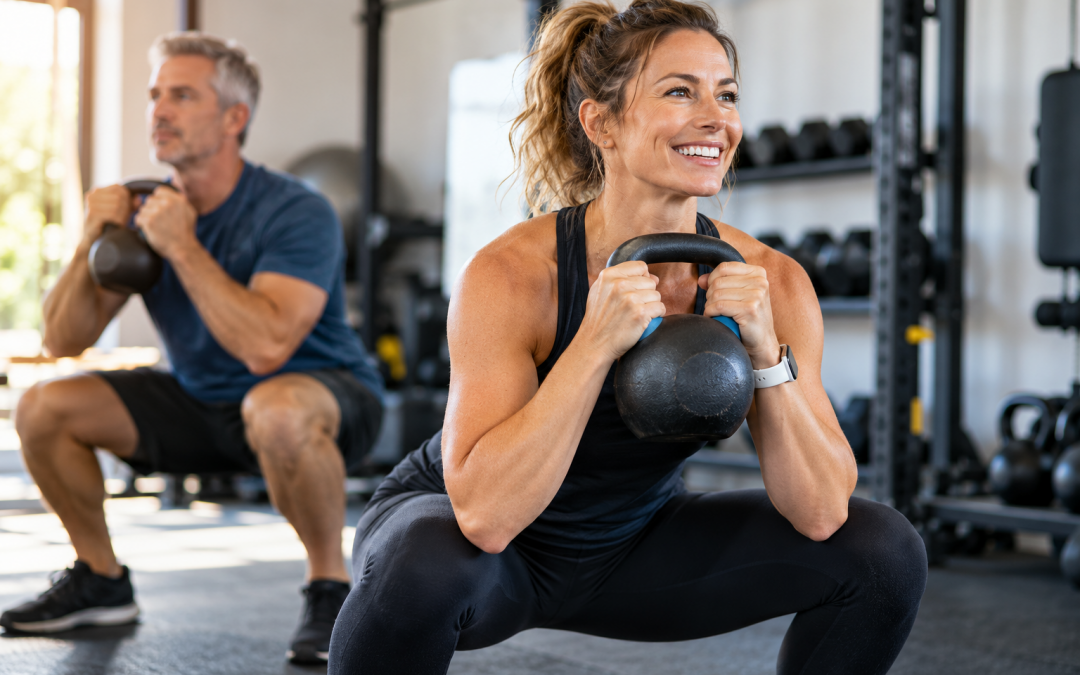
That could involve barbells and dumbbells, but it could equally involve resistance bands, machines, kettlebells or your own bodyweight.
Exercises such as squats, lunges, rows, presses and even getting up and down from a chair all involve movements that we use in everyday life.
The goal isn’t necessarily to become exceptionally strong. It’s about making your body more capable of handling the demands you place upon it.
Why Strength Becomes More Important As We Get Older
One of the biggest reasons to consider strength training is that maintaining muscle becomes increasingly important as we age.
If we become less active, we can gradually lose muscle mass and strength. Over time, everyday activities that once felt easy can become more demanding.
Regular resistance training can help maintain strength, muscle and physical function.
And you don’t need to wait until you’re older to think about it.
Building and maintaining strength throughout adulthood can help create a useful physical “reserve” for later life.
Think of it almost like a pension for your body: investing a little regularly now could leave you in a much better position in the future.
It Can Help Build a More Resilient Body
At BodyWorx, we regularly see people who become sore or injured when the demands placed on their body suddenly exceed what it is accustomed to.
Perhaps you’ve spent months sitting at a desk and then decided to spend an entire weekend gardening.
Maybe you’ve gone from playing no sport to two games of padel every week.
Or you’ve decided to start running again after several years away.
Sometimes the problem isn’t that a particular movement is inherently “bad”. Your body simply wasn’t adequately prepared for the amount of work you suddenly asked it to perform.
Progressive strength training can increase your body’s capacity.
Stronger muscles don’t make you invincible, and strength training can’t guarantee that you’ll never experience pain or injury. But gradually preparing your body for the activities you want to perform makes a lot of sense.
You Don’t Have to Train Like an Athlete
A common misconception is that strength training requires spending five days a week in the gym.
It doesn’t.
For many people, two or three well-planned strength sessions each week can be a great starting point.
The important word is progressive.
If you’ve never exercised before, starting with a challenging barbell workout probably isn’t sensible. Your starting point might simply be bodyweight exercises or light resistance.
As your body adapts, you can gradually increase the resistance, repetitions or difficulty.
The aim isn’t to destroy yourself every workout.
It’s to give your body enough stimulus to adapt, recover and become stronger.
What If You Already Have Back, Neck or Joint Pain?
Having pain doesn’t automatically mean you should avoid exercise, but it may change how you approach it.
There is a big difference between appropriately modifying an exercise and simply avoiding movement altogether.
If an exercise repeatedly aggravates your symptoms, or you’re unsure what you should and shouldn’t be doing, getting assessed can help identify an appropriate starting point.
At BodyWorx Health Clinic in Totton, our chiropractors and musculoskeletal therapists regularly work with people experiencing back pain, neck pain, joint problems and sports-related injuries.
Our goal isn’t simply to help you feel better in the short term. Where appropriate, we also want to help you regain movement, strength and confidence so you can return to the activities you enjoy.
The Bottom Line
Strength training isn’t just about bigger muscles or lifting impressive weights.
It’s about maintaining a body that’s capable of doing the things you want it to do.
Whether that’s playing sport, running around with your children, gardening, travelling, staying independent as you get older or simply getting through everyday life without everything feeling like hard work.
You don’t need to become a powerlifter.
But becoming a little stronger?
Your future self may be very grateful you did.